We use the word unique rather too easily when speaking of an artist who approaches a discipline in a personal way. That word should be reserved for people like Katy De Bock, who surprises not only through how she works, but through the intensity with which she reinterprets collage and tapestry weaving, giving them another face, another dimension.
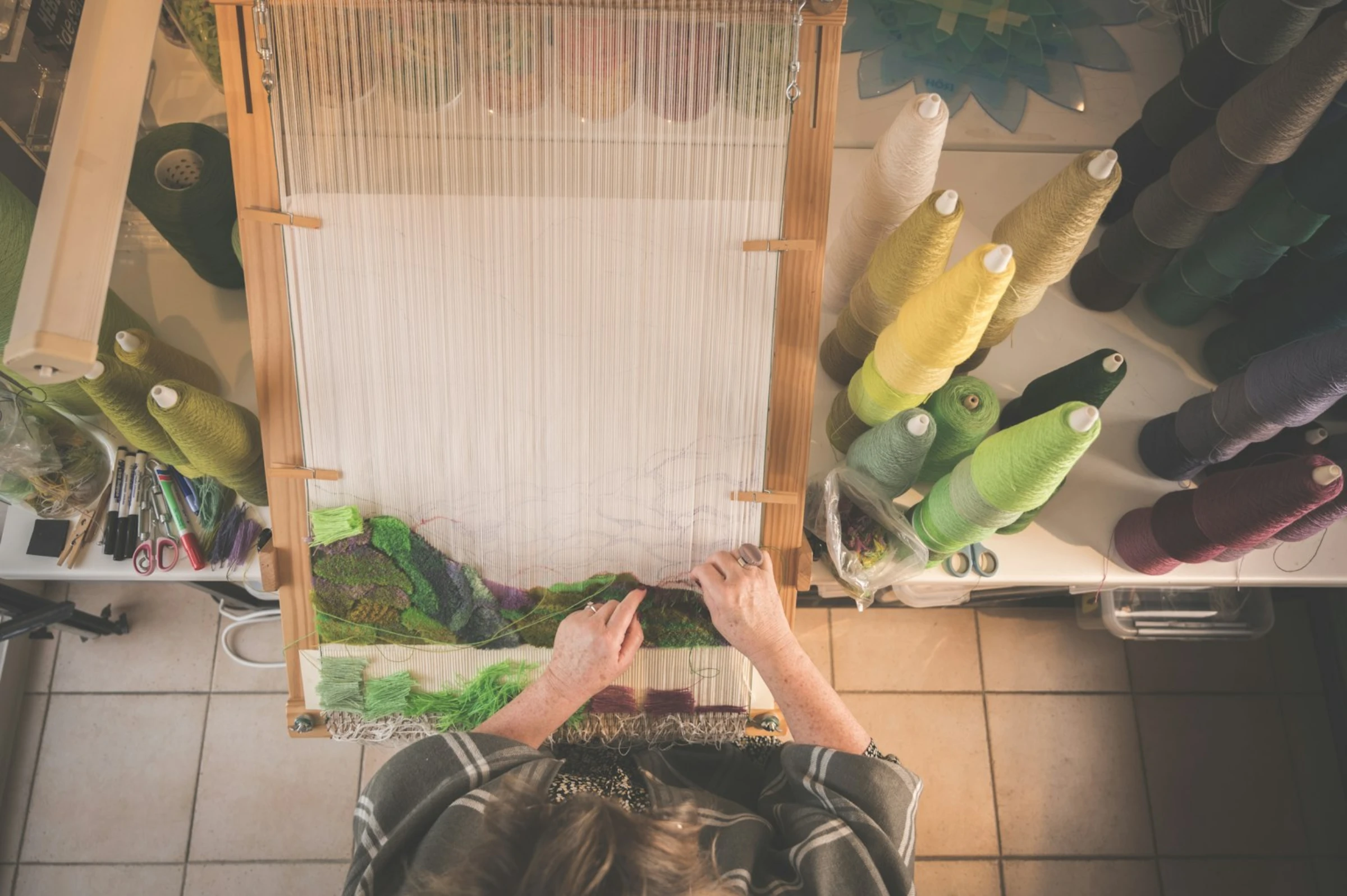
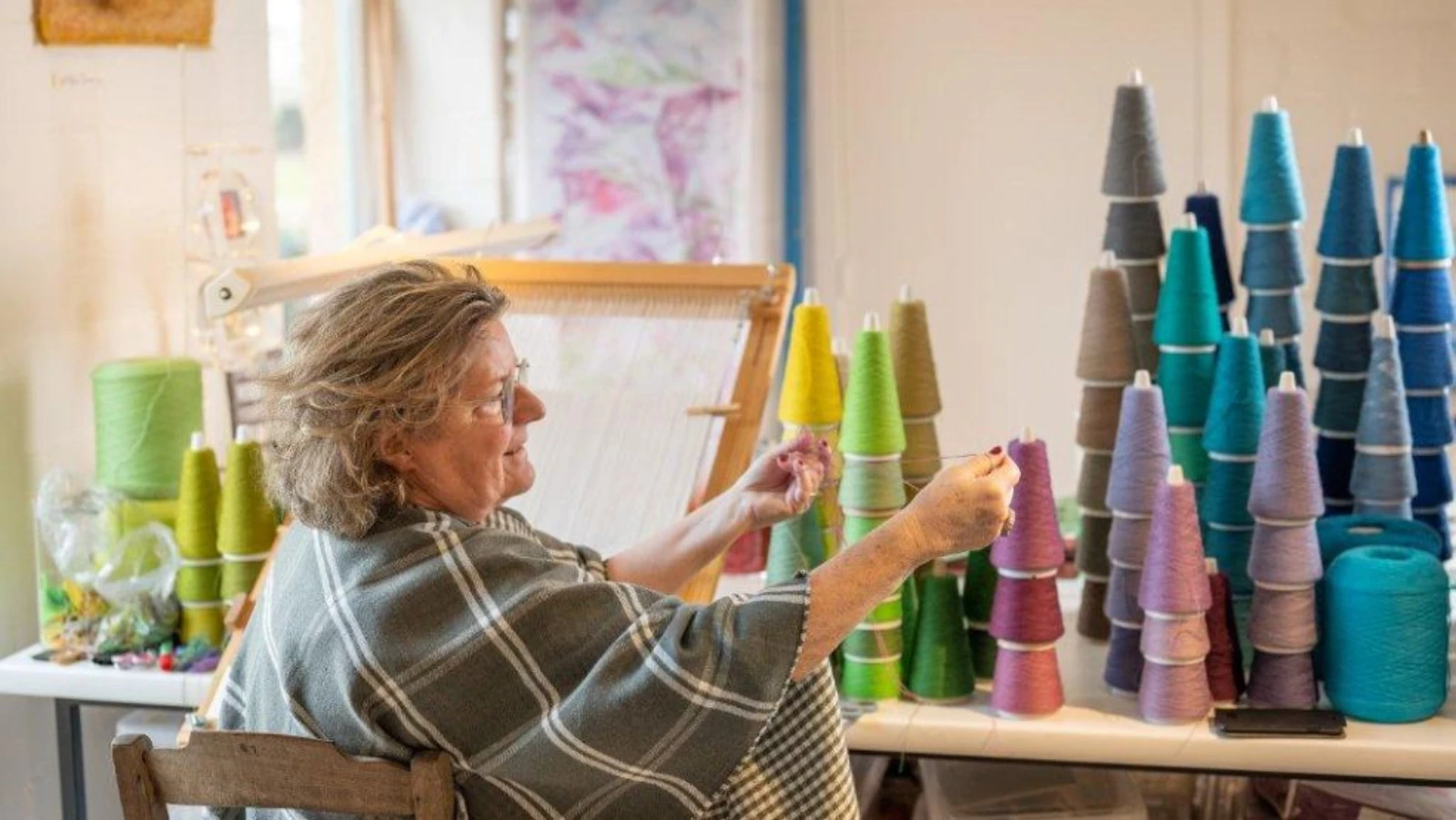
These are not collages as we usually know them, and tapestry weaving too readily suggests a loom that fixes a whole line at once. Creating a scene from coloured threads — where warp and weft meet in a long dialogue, as Katy De Bock practises it — is an old technique, too slow for today, once taught by Roger Bonduel. What others let slip into oblivion became, for one of his students, a source of experiment with matter and colour, subtle relief, depiction and suggestion.
Thread by thread, colour by colour, she weaves horizontally with a needle between taut verticals. So grows a hint of shadow, a streak of light, the first tint of a flower, a fingertip of sun, the darkness of a ship on water, a shard of summer.
Her presentation of woven jewels — the word tapestry feels too blunt for this brilliance — shows her sense of order and class, of something pure that is also simple and functional. She tells of the simple things around her and elevates them: sun and flowers, light and landscape, a world of serenity, sea and skies, a still life, a table as a symbol of togetherness, an interior, colours that make one happy — realised with a hundred coloured threads, and also on paper with delicate matter.
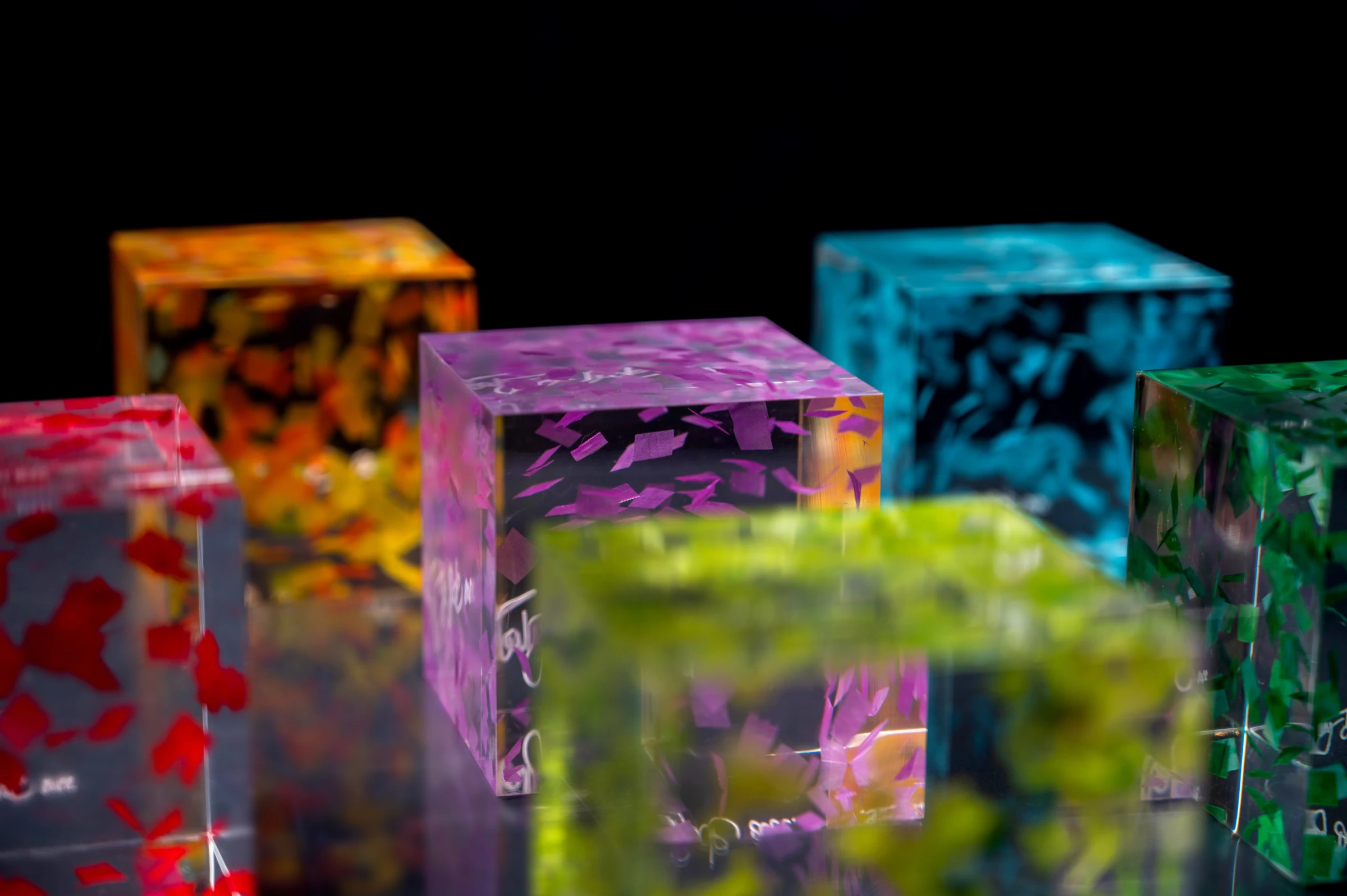
As she weaves a landscape among countless threads, so she paints with paper — scraps of red and green, yellow and purple, blue — threads of Japanese silk paper, sheets she has dyed herself and torn into petals. Again, extreme care for detail. Her figurative language is refined and poetic at once: colourful in collages, dreamlike in textile works, sensitive in drawings. The patience of her technique amazes; yet the contemporary character of the whole oeuvre must not be overlooked.
— Hugo Brutin, 1997